Structural Changes Across Audio Categories in 2026
Supply-side signals arrive earlier than sales data, and 2026 shows flat totals with structural migration: TWS and portable speaker orders have stabilized while growth flows into wearables and scenario-specific categories.
| Category | Supply signal | Buyer focus |
|---|---|---|
| AI and smart audio glasses | Module and hinge orders up | Scale delivery and yield |
| Open-ear headphones | Tooling counts rising | Leakage and comfort |
| TWS | Price bands compressing | Differentiation and sound |
| Sleep and under-pillow audio | New entrants multiplying | Acoustic maturity |
| Karaoke and party | Regional divergence | Power and compliance |
AI Glasses: From Demo to Volume Delivery
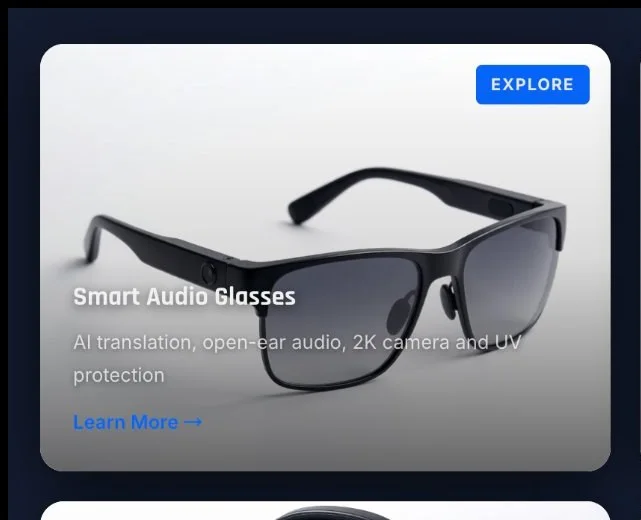
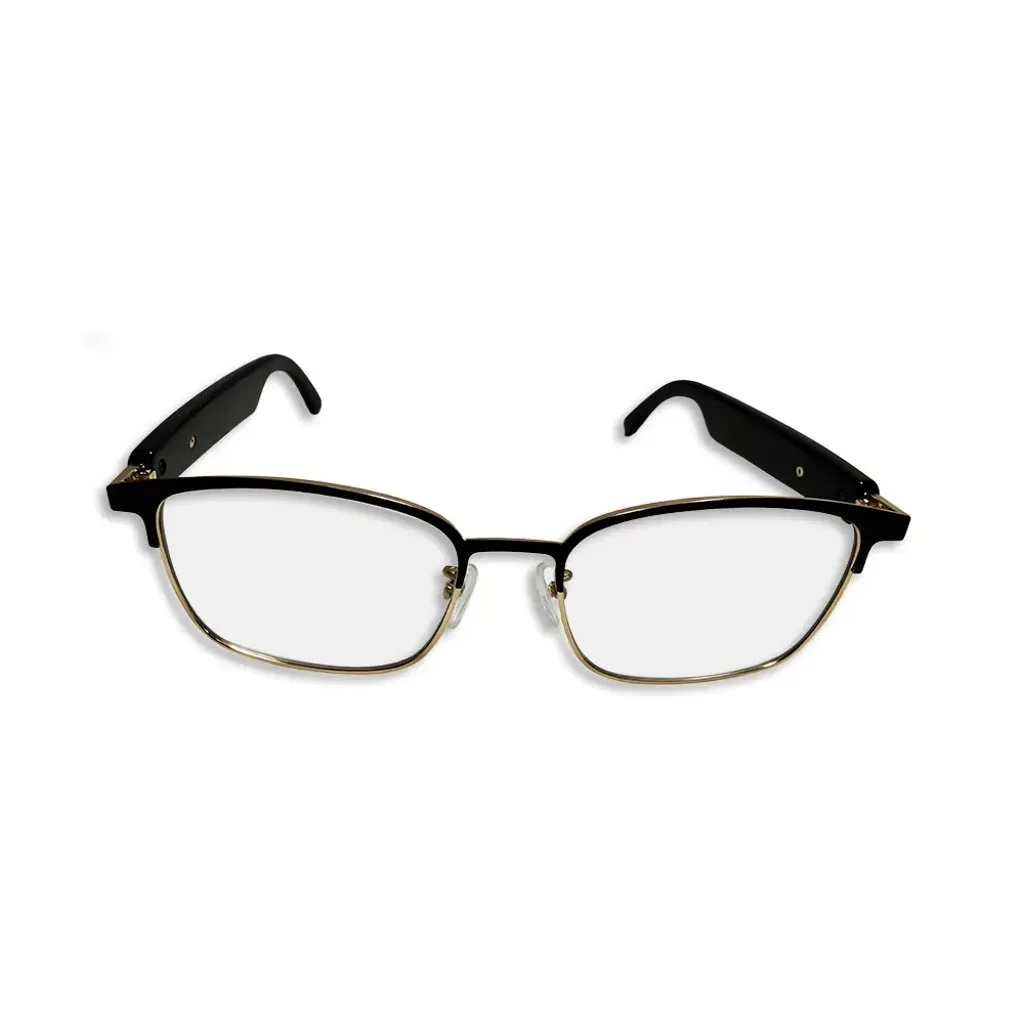
AI glasses completed the shift from demo to batch delivery in 2025-2026, with camera modules, frames, and batteries no longer ordered in pilot quantities. Engineering gates: weight at 35-55 g with balance near the nose pad, temple temperature below 42 degrees with camera and processor running, and open-ear acoustics with leakage below 45 dB(A) at 1 m. Yield is the scale metric, where early projects pass at 70-80 percent and mature lines need 92-96 percent.
Where Open-Ear Headphone Growth Comes From
Open-ear growth is driven by wear time, not fidelity: in-ear fatigue limits sessions to 1-2 hours while open forms stretch use to 4-8, unlocking office, commuting, and sports. Air-conduction directional designs offer fuller response while bone conduction stays irreplaceable for swimming; both fight to keep leakage below 40-45 dB(A) at 1 m through directional cavities and phase-canceling drivers. IPX4-IPX5 is standard, and sports models need IPX7 at the cost of bass-affecting seals.
Differentiation in a Saturated TWS Market
TWS is a stock market where price cuts show diminishing returns: 20-30 USD is crowded and 80 USD plus belongs to incumbents. Differentiation lives in scenario splits such as sleep buds and conferencing with multi-mic ENC, in acoustic tuning as same-price hardware converges, in latency where LE Audio and LC3 bring 40-80 ms, and in runtime at 24-32 hours total for mid-premium. LE Audio adds BOM and R&D, so value depends on replacement cycles of 2-3 years in Europe and the US.
Tariffs, Compliance, and Logistics Costs
Tariffs remain the main 2026 uncertainty, and the answer is resilience: 2-3 substitutable suppliers for SoCs and batteries that make up 40-60 percent of cost, multi-origin evaluation with full local accounting, and front-loaded EU battery compliance. Certification for EU and North American entry runs 6-12 weeks in the first-year budget. Ocean freight from Shenzhen runs 25-40 days to Europe, with air reserved for launches and Q4 capacity booked early.
Stocking Recommendations for Buyers and Brands
Set inventory by category: TWS and speakers on quarterly rolling forecasts, AI glasses and open-ear on 6-8 week cycles, packaging at 1.2-1.5x separate from build-to-order units, and key components locked 8-12 weeks ahead. Start certification during pilot production, reserve 15-25 percent peak capacity, and expect 16-24 weeks for full custom programs.
Why Choose Aurora Sound
Aurora Sound is a Shenzhen source manufacturer across eight categories from smart audio glasses to TWS and portable speakers. The 2026 strategy keeps breadth and flexibility: shared line rhythm and quality systems across one brand's projects, multi-supplier backups, and certification and packaging planned per market to compress shelf time.