Defining the Smart Audio Glasses Category
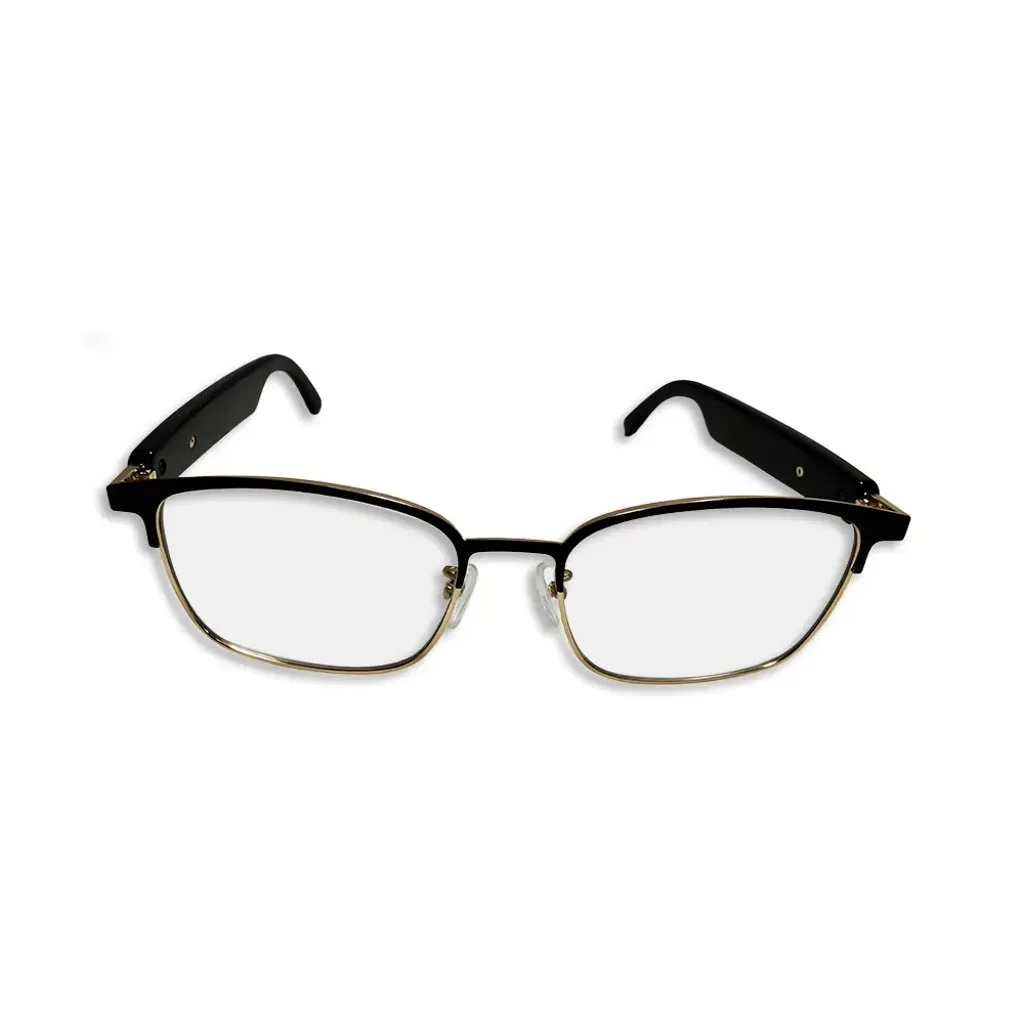
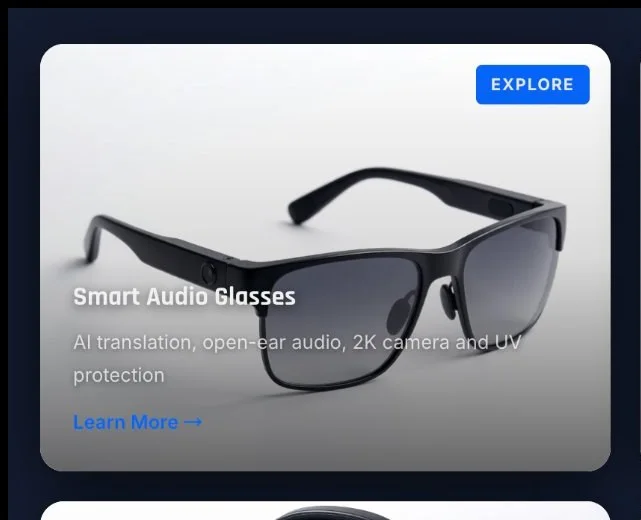
Four products share the name, so draw boundaries before sourcing. Pure audio glasses carry only speakers, microphones, and Bluetooth, and dominate shipments. Camera glasses add an 8MP or 2K module for first-person capture, while waveguide AR glasses remain cost-constrained. The first two categories deliver at scale in 2026; judge maturity by weight under 50 g, playback beyond 6 hours, and yield above 90 percent. Decide what the product replaces: earbuds mean leakage, cameras mean stabilization.
Open-Ear Acoustics: Directional Speakers vs. Bone Conduction
Open-ear acoustics is the biggest technical fork, and the two paths share no physics.
| Dimension | Directional air conduction | Bone conduction |
|---|---|---|
| Conduction path | Micro speakers beam sound into the ear canal | Vibration through the skull to the cochlea |
| Frequency range | 100 Hz to 16 kHz typical | Weak above 8 kHz in real coupling |
| Leakage at 30 cm | 40-55 dB | Transducer radiates, needs isolation |
| Cost | Medium | Medium to high |
Camera Modules: 8MP, 2K, and Stabilization
The camera is the largest cost and power increment: 5MP serves entry stills, 8MP supports 1080p or 2K as the 2026 mainstream at 8-15 USD per module, and higher tiers need more ISP compute. Wide fields of view bring edge distortion, electronic stabilization crops the frame and adds 30-80 ms of latency, and temple surfaces should stay below 42 degrees Celsius after ten minutes of recording. Privacy rules in some markets require a recording indicator designed in early.
Bluetooth 5.4, Power, and Battery Life
Bluetooth 5.4 adds low-duty-cycle advertising and finer connection control for intermittent links. Typical draw runs 0.5-1.5 mA standby, 15-35 mA playing audio, and 150-350 mA recording, which translates to 6-10 hours of music and 40-80 minutes of camera use. Capacity is weight-bound at 80-160 mAh per temple, charging runs on magnetic contacts, and firmware tuning of connection intervals and ISP power gating recovers 20-30 percent of battery life.
Structure and Fit: Materials, Weight Balance, Lenses
Structure drives returns more than acoustics. Total weight of 45-55 g is the all-day envelope, and splitting battery and board between temples keeps the center of gravity near the frame. TR90 and nylon dominate frames while titanium serves premium SKUs, and hinges tested for 5,000-10,000 cycles and finish costs deserve attention. IPX4 is the sweat minimum, and IPX5 and above demands waterproofing at ports and contacts that trades against acoustics.
OEM/ODM Path and MOQ
Projects run six stages: requirement definition 1-2 weeks, ID design 2-4 weeks, MD and prototypes 4-6 weeks, EVT and DVT 7-11 weeks, then PVT ramp 4-8 weeks. Full frame and temple tooling runs 250,000-600,000 RMB depending on cavities and double-shot molding, and wireless, battery, and EMC certifications add 6-10 weeks by market. MOQ starts at 1,000-2,000 units for color and packaging customization and 3,000-5,000 for structural changes.
Why Choose Aurora Sound
Aurora Sound is a Shenzhen source factory for smart audio glasses and open-ear OEM/ODM programs. When auditing smart audio glasses manufacturers, verify acoustic tuning and structural stacking, because directional port angles and phase cancellation need multiple rounds of real-head testing that decide leakage and sound. The V03 and G06 platforms cover audio-only and camera-equipped starting points, prototyping through EVT happens in-house, and certification experience spans major export markets.