Real Requirements in Teaching and Tour Guide Scenarios
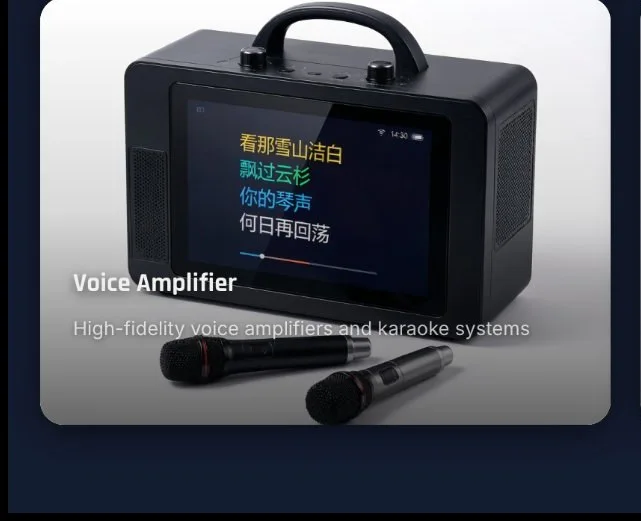
Voice amplifiers are technically underestimated. Their environment is harsh: long operation, reverberant rooms, moving wearers, and hands-free needs. Teaching centers on voice protection, with teachers speaking 3-6 hours a day in 50-90 square meter rooms with 0.6-1.2 s reverberation. Tour guiding adds higher ambient noise, wider movement, and outdoor sun and drizzle. Confirm the primary scenario before setting specifications.
Converting Rated Power into Audience Coverage
Power is the most inflated figure. RMS, PMPO, and music power differ by 5-10x, so contracts must specify acceptance by rated power. SPL falls about 6 dB per doubling of distance from a point source, and with typical 88-94 dB/W/m sensitivity the coverage maps cleanly.
| Rated power | SPL at 1 m | Audience | Typical venue |
|---|---|---|---|
| 5-8 W | 95-100 dB | 20-40 | Small classroom |
| 10-15 W | 100-106 dB | 40-80 | Standard classroom |
| 20-30 W | 106-112 dB | 80-150 | Hall, outdoor guide |
| 40-60 W | 112-118 dB | 150-300 | Playground assembly |
Feedback Suppression: From EQ to Adaptive Algorithms
Feedback occurs when speaker output loops back into the microphone and self-oscillates. Suppression stacks four layers: directional cardioid or supercardioid capsules aimed away from the speaker, narrow notch filters on 3-8 howling frequencies, a 3-8 Hz frequency shift that breaks the phase condition, and adaptive suppression responding within 100-500 ms. Together they lift usable gain by 15-25 dB. Verify in a real room by raising volume until onset and backing off 3 dB.
Wearing Styles: Waistband, Shoulder, and Headset
Wearing style sets pickup distance, which sets feedback margin. Waistband models dominate teaching and guiding, hosting larger amplifiers and batteries at the cost of cable routing, so demand 5,000-cycle bend tests on leads. Shoulder units sit closer to ear height with better directivity for walking guides. Headsets fix the capsule 3-5 cm from the mouth, lifting feedback margin 6-10 dB and freeing hands, at 40-70 g with soft silicone hooks.
Battery Life, Charging, and Battery Safety
Amplifier endurance far exceeds ordinary audio. At half volume, 2,000 mAh supports 6-10 hours, 3,000-4,000 mAh supports 12-20 hours, and 5,000 mAh and above runs 20-30 hours; full-power figures halve. Specify test conditions in the spec sheet. Batteries need UN38.3 and IEC 62133 reports with protection-board coverage, charge-while-use support, surface temperature below 50 degrees Celsius, and capacity retention above 80 percent after 300-500 cycles.
Quality Verification for Volume Procurement
Volume procurement fears good samples and drifting mass production. Split acceptance into incoming inspection per AQL 2.5, functional sampling at 3-5 percent, and small-sample reliability checks. Measure rated power and runtime at or above 90 percent of claim, THD below 5 percent at half power, and maximum feedback-free gain. Contract terms: zero tolerance on critical defects, AQL 1.0 on majors, and 2.5 on minors.
Why Choose Aurora Sound
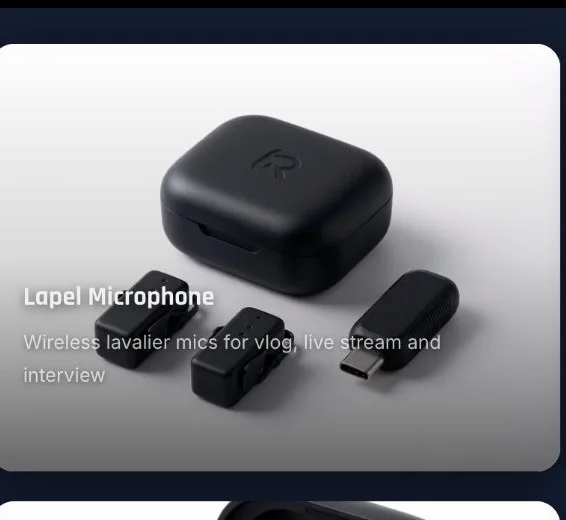
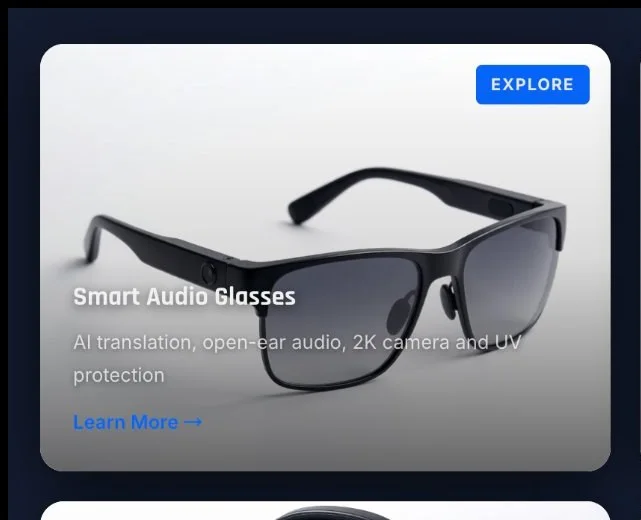
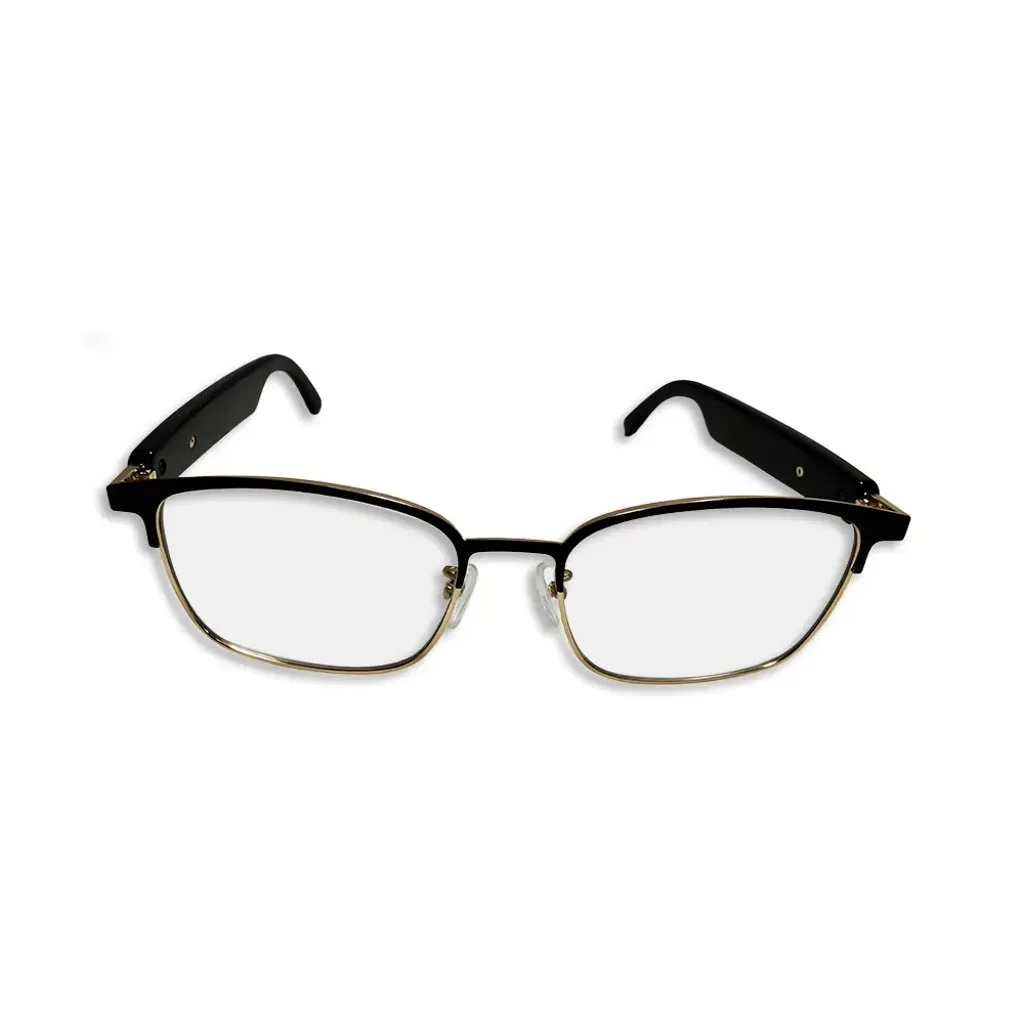
Aurora Sound is a Shenzhen source factory for OEM/ODM audio covering voice amplifiers, wireless lavalier microphones, smart audio glasses, and portable speakers. Engineering focus sits on feedback suppression tuning in real classrooms and thermal management for long shifts, with M28 as the category workhorse covering teaching and guiding power and runtime needs. Source manufacturing keeps structural parts and PCBA in one system, shortening engineering-change loops.