What Makes Up End-to-End Latency
Bluetooth earphone latency must be split before it can be solved. Perceived AV desynchronization is the sum of four segments: source buffering of 20-300 ms set by the app or game engine, codec framing of 4-15 ms, radio transmission and retransmits of 5-30 ms under interference, and receive-side jitter buffers of 40-200 ms, the largest controllable variable. OEMs can only optimize the last two, which explains why one headset varies by 100 ms across phones.
SBC, AAC, the aptX Family, and LDAC Compared
Codec choice sets the floor. SBC, the mandatory A2DP codec at 192-328 kbps, lands at 150-250 ms and is the compatibility baseline. AAC matches that range on iOS while Android encoders vary, the aptX family runs lower, and LDAC trades latency for bandwidth.
| Codec | Bitrate | Top spec | Latency | Sender support |
|---|---|---|---|---|
| SBC | 192-328 kbps | 48 kHz / 16 bit | 150-250 ms | Universal |
| AAC | 128-256 kbps | 44.1 kHz / 16 bit | 150-250 ms | Universal |
| aptX | 352 kbps | 48 kHz / 16 bit | 100-150 ms | Required |
| aptX Adaptive | 279-420 kbps | 48 kHz / 24 bit | 50-80 ms | Required |
| LDAC | 330-990 kbps | 96 kHz / 24 bit | 150-250 ms | Required |
What LE Audio and LC3 Bring
LE Audio with LC3 is a bottom-rail change, not just a lower-latency codec. LC3 matches SBC quality at half the bitrate, with a 10 ms frame enabling 20-30 ms theoretical paths over isochronous channels that also bring broadcast audio. Shorter radio time at equal quality benefits TWS battery life directly. Adoption requires support on both ends, so dual-mode designs remain the safe TWS configuration for the next two to three years at added stack and qualification cost.
Low-Latency Solutions for Gaming, Streaming, and Karaoke
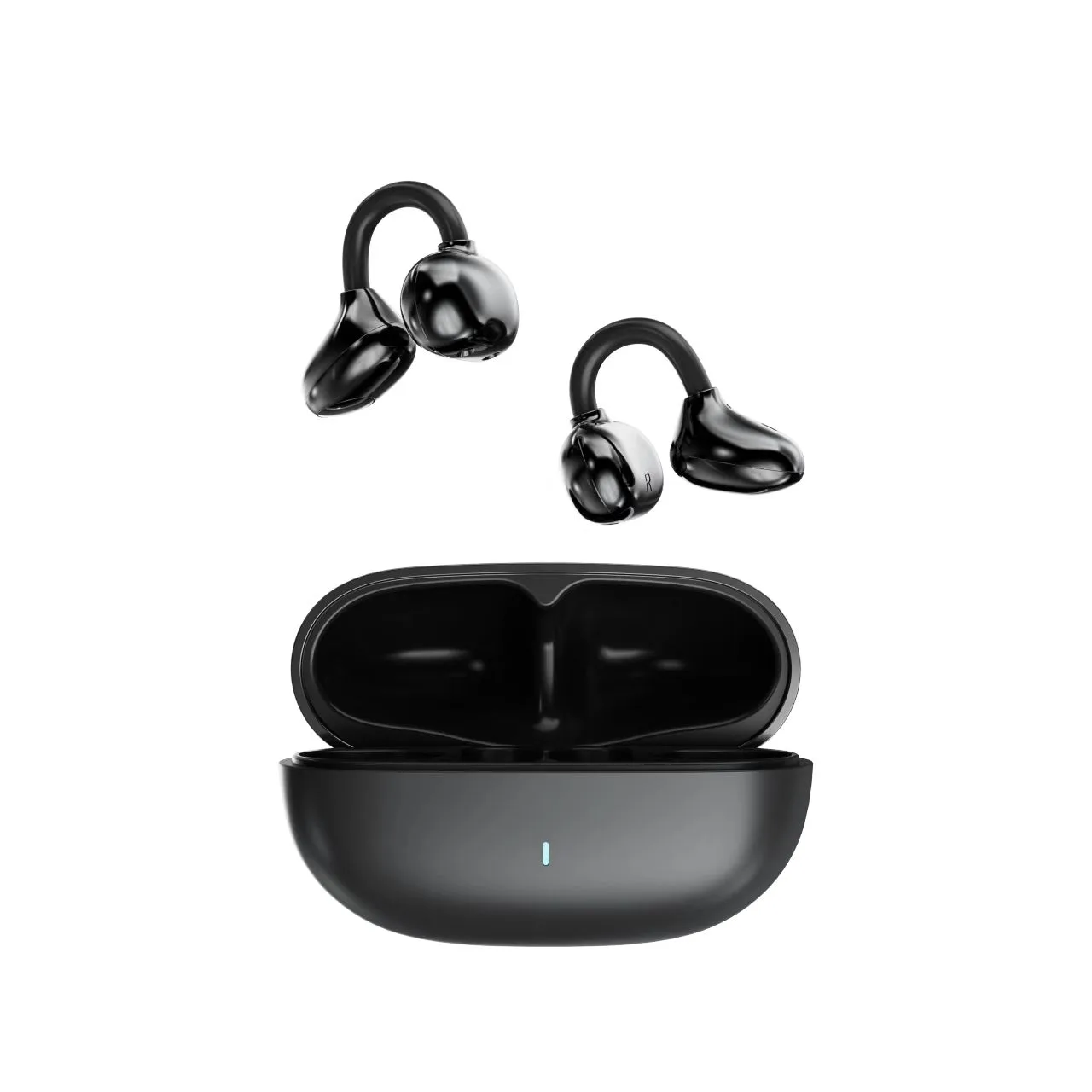
Scenario thresholds: video stays under 100 ms before lip sync breaks, competitive gaming under 60 ms, rhythm games under 40 ms, and instrument practice under 20 ms. The standard gaming play pairs a low-latency mode with a dedicated sender, landing 40-80 ms when both ends support aptX Adaptive, or compressing receive buffers to 40-60 ms on SBC or AAC fallback at the cost of dropouts under interference. Proprietary 2.4 GHz links with USB dongles reach 20-40 ms, while karaoke products route the uplink privately because Bluetooth HFP caps uplink quality.
AV Sync and Latency Compensation
AV sync relies on compensation, not zero latency. Video players read the OS-reported audio delay and hold frames accordingly, but accuracy depends on honest firmware reporting, so OEMs should measure true latency with a high-speed camera and write calibrated values in. Games rarely compensate, so those scenarios must cut link latency itself, and a physical floor of a dozen milliseconds remains regardless of optimization.
OEM Execution of Low-Latency Programs
Low-latency headphone OEM programs start by quantifying targets in the RFQ: the latency ceiling per scenario, the sender device list, fallback behavior when proprietary codecs are unavailable, and the acceptable glitch rate under interference. iOS-heavy audiences get no value from aptX, pointing to AAC buffer tuning or 2.4 GHz links, while Android mid-to-premium markets favor aptX Adaptive. Codec licensing and LE Audio qualification fees belong in the BOM and schedule from day one.
Why Choose Aurora Sound
Aurora Sound is a Shenzhen source factory for audio OEM/ODM. Low-latency engineering concentrates on buffer tuning tiered by target sender devices, measured calibration of reported latency so player compensation actually works, and hybrid Bluetooth plus 2.4 GHz designs covering live streaming and karaoke. The A9 Pro platform exposes buffer depth and low-latency switching in firmware, adapted per client sender lists, with licensing and qualification managed in-project.