How the Three Form Factors Differ Acoustically
All earphones convert electrical signals into cochlear motion, and the three form factors differ in path. In-ear drivers push air in a sealed canal straight to the eardrum, giving a 10 mm dynamic driver 105-110 dB/mW sensitivity. Open-ear units hover 3-8 mm outside the canal, losing 10-20 dB at 100 Hz to short-circuit. Bone conduction transducers press on the temporal bone with sensitivity of 80-90 dB/mW and usable bandwidth of 150 Hz to 8 kHz, which is why non-in-ear forms trade amplifier and battery for equal loudness.
Bone Conduction: Strengths, Leakage, and Bandwidth Limits
Bone conduction value is not fidelity but three properties: a fully open canal, zero intrusion, and a preserved path for conductive hearing loss. Ambient sound stays complete for cycling and industrial inspection, and long wear avoids canal moisture. Bandwidth limits at 150 Hz to 8 kHz with obvious sub-100 Hz loss, while the 20 Hz to 20 kHz claim measures the transducer alone, not coupling. The vibrating surface radiates leakage of 35-45 dB at 1 kHz one meter away, the office-neighbor complaint.
Open-Ear Air Conduction: Soundstage and Fit
Open-ear air conduction replaced bone conduction atop non-in-ear lists by restoring acceptable sound while keeping the canal open. Drivers of 13-18 mm with rear cavities and Helmholtz tuning near 80-120 Hz recover part of the loss, and directional phase control or acoustic ducts concentrate energy toward the canal, cutting side leakage 8-15 dB, the key gap over bone conduction. Ear-hook or clip designs hold 0.5-1.2 N with titanium skeletons.
In-Ear: Isolation, Listening Fatigue, and Safety
Passive isolation is the in-ear parameter.
| Eartip | 125 Hz | 1 kHz | 4 kHz |
|---|---|---|---|
| Single-flange silicone | 8-12 dB | 15-22 dB | 25-30 dB |
| Multi-flange silicone | 12-18 dB | 20-26 dB | 28-35 dB |
| Slow-rebound foam | 15-25 dB | 25-35 dB | 35-42 dB |
Choosing by Scenario: Sports, Commuting, Industrial
Scenario mapping: city cycling favors open-ear or bone conduction, gym and running accept either with in-ear, commutes at 80-85 dB need in-ear with ANC, industrial inspection at 85-100 dB pairs bone conduction with hearing protection, and offices suit open-ear. At 25 km/h, wind noise reaches 85-95 dB regardless of form, so the answer is open structures plus wind-tamed call microphones.
OEM Selection and Structural Waterproofing
For OEM programs, fix form factor before acoustics, since transducers, cavities, and DSP differ completely and switching means redoing both. Define the IP rating early: open products span IPX4 to IPX7, and magnetic contacts waterproof more easily than bare Type-C. Write leakage into the spec as measured dB at 1 m and rated volume for 1 kHz and 3 kHz, verified in an anechoic chamber. Bone conduction transducers cost 2-4x similar dynamics and push BOM 15-30 percent above open-ear. G06 is Aurora's open-ear platform.
Why Choose Aurora Sound
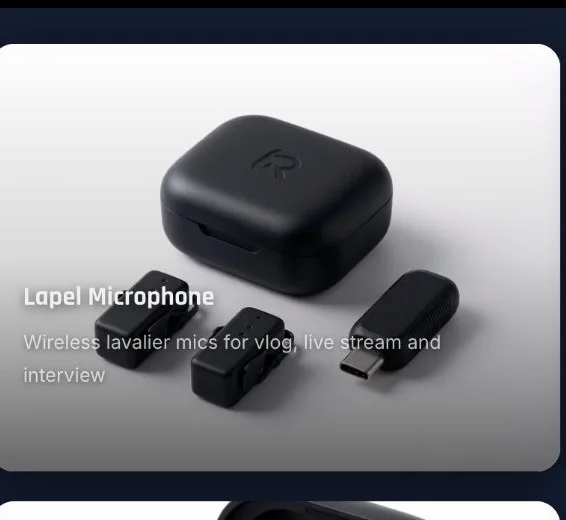
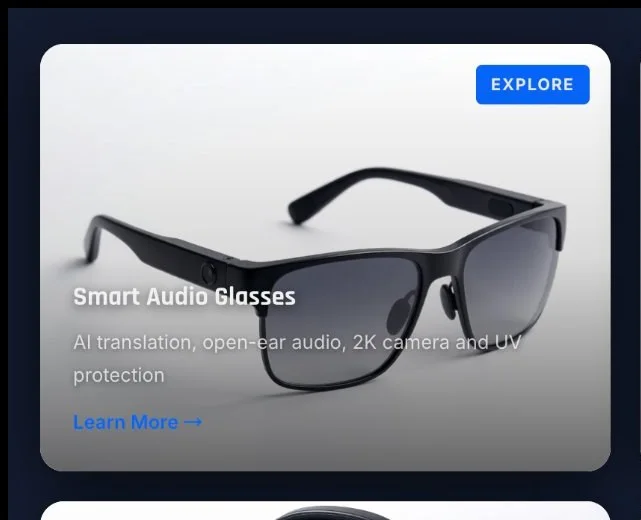
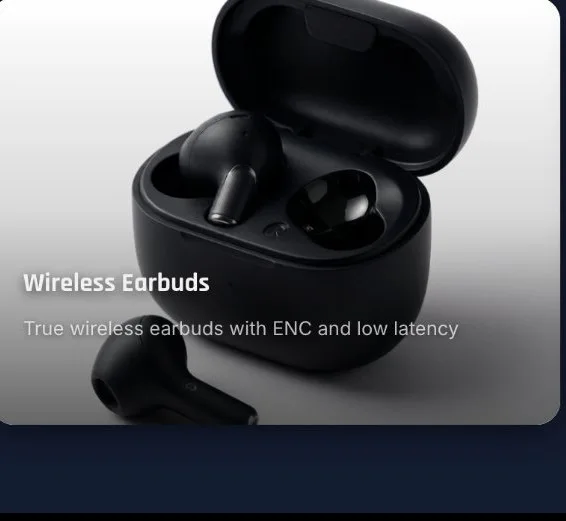
Aurora Sound is a Shenzhen source factory covering smart audio glasses, wireless lavalier microphones, under-pillow speakers, amplifiers, karaoke, open-ear and bone conduction, TWS, and portable speakers. Source manufacturing spans transducer selection, cavity simulation, DSP tuning, waterproofing, and assembly in-house, with an acoustic lab for leakage and IP testing producing RFQ-grade reports, and one team carrying ID review through EVT and DVT.