What a Polar Pattern Is and How to Read the Chart
A polar pattern describes how microphone sensitivity varies with the angle of arriving sound, plotted on a polar chart where 0 degrees is on-axis and 180 degrees is behind. Read three values: on-axis reference, 90-degree side rejection deciding reflection pickup, and 180-degree rear rejection deciding bleed and feedback risk. A cardioid rejects about 20 dB at the rear, shortening pickup to one tenth. Single diaphragms also approach omnidirectional at low frequencies.
Omnidirectional, Cardioid, Supercardioid, and Shotgun
Patterns narrow in five common steps.
| Pattern | 90-degree loss | 180-degree loss | Effective angle | Rear lobe |
|---|---|---|---|---|
| Omnidirectional | 0 dB | 0 dB | 360 degrees | None |
| Cardioid | -6 dB | -15 to -25 dB | 131 degrees | None |
| Supercardioid | -8.7 dB | -11 dB | 115 degrees | Small |
| Bidirectional | Maximum | 0 dB | 90 degrees | Symmetric |
| Shotgun | -10 to -15 dB | -20 to -30 dB | 30-60 degrees | Small |
Proximity Effect and Off-Axis Coloration
Proximity effect is inherent to cardioid and supercardioid pressure-gradient capsules: closing from 30 cm to 2 cm can lift 100 Hz by 10-20 dB. Answers include 80 or 150 Hz high-pass filters, passive compensation cavities, and distance-aware DSP EQ, though podcast hosting keeps some proximity bass for warmth. Off-axis coloration matters equally: above 45 degrees many cardioids lose highs and voices darken, so judge designs by whether curves at 0, 45, and 90 degrees keep similar shape.
A Selection Matrix by Scenario
Choosing an interview microphone starts with two questions: can you get close, and what does the noise floor look like. When close placement works, patterns relax and omnidirectional capsules sound more natural with flatter bass and lower wind noise. Conference tables favor omnidirectional capsules with arrays and processing, while stage vocals against wedges demand supercardioid.
Multi-Microphone Arrays and Beamforming
When one capsule is not directional enough, arrays plus beamforming extend reach: delay-and-sum alignment reinforces the target direction while off-axis phases partially cancel, and aperture sets beam width. Spacings above half a wavelength create spatial aliasing, so 20 mm spacing caps clean beamforming near 8.5 kHz and 60 mm near 2.8 kHz, pushing broadband designs toward nested arrays. Adaptive beamformers improve suppression but demand channel matching within 1 dB, enforced through incoming binning.
OEM Selection of Microphone Modules
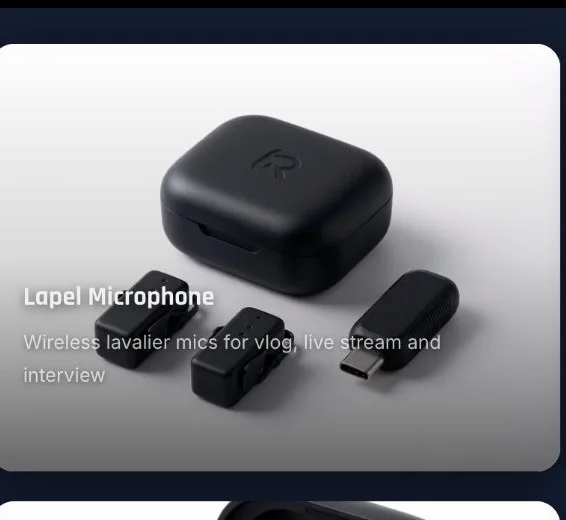
Microphone OEM customization starts from pickup goals, not model numbers. RFQs should state source distance (mouth-adjacent, 30 cm, or beyond 1 m), noise spectrum, size and inlet constraints, waterproof needs, and channel count with beamforming requirements. Lavalier products typically choose omnidirectional capsules because collar placement is stable relative to the mouth. Production control hinges on sensitivity and phase binning, inlet consistency, and end-of-line acoustic retest.
Why Choose Aurora Sound
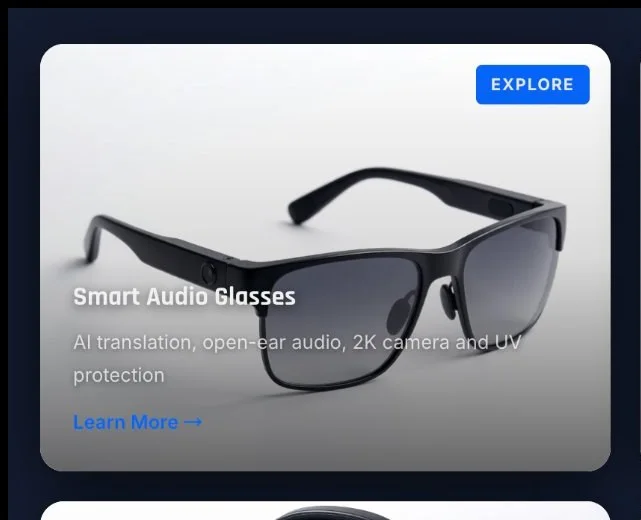
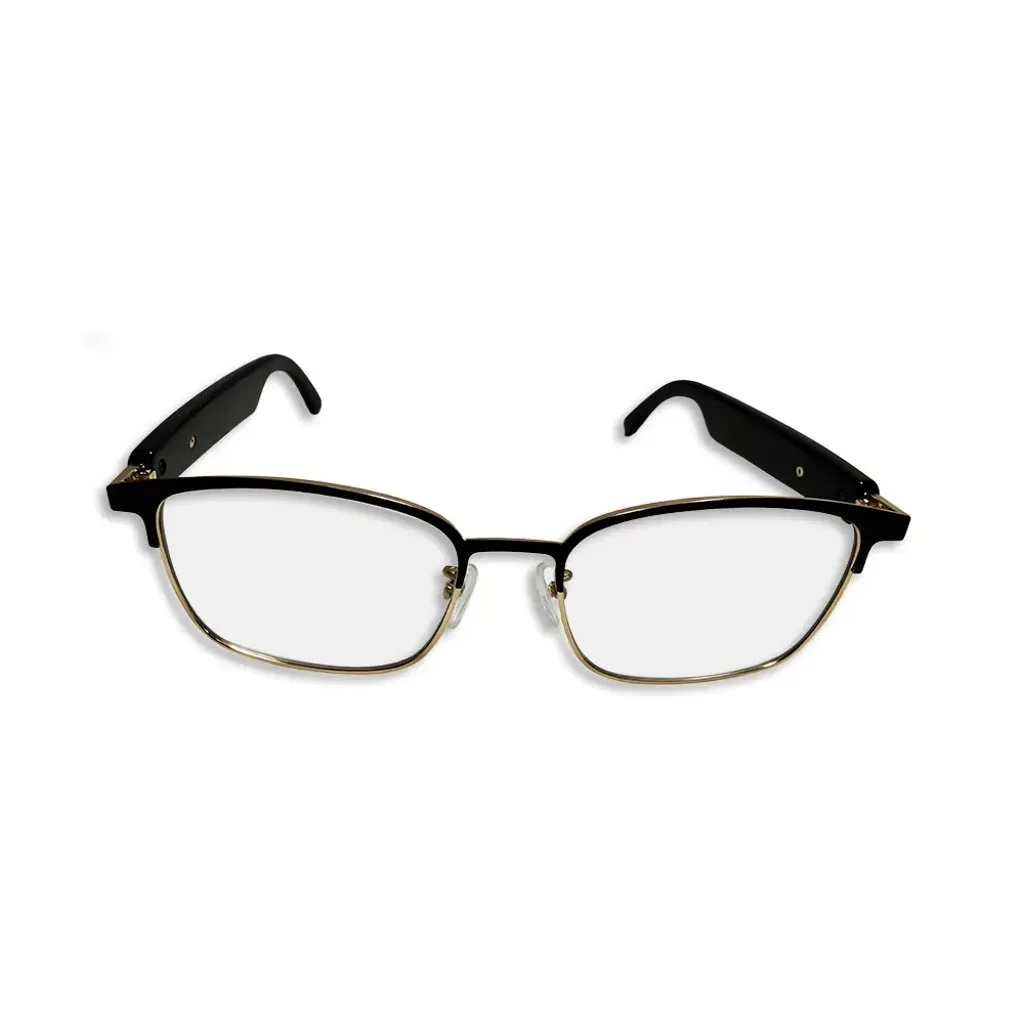
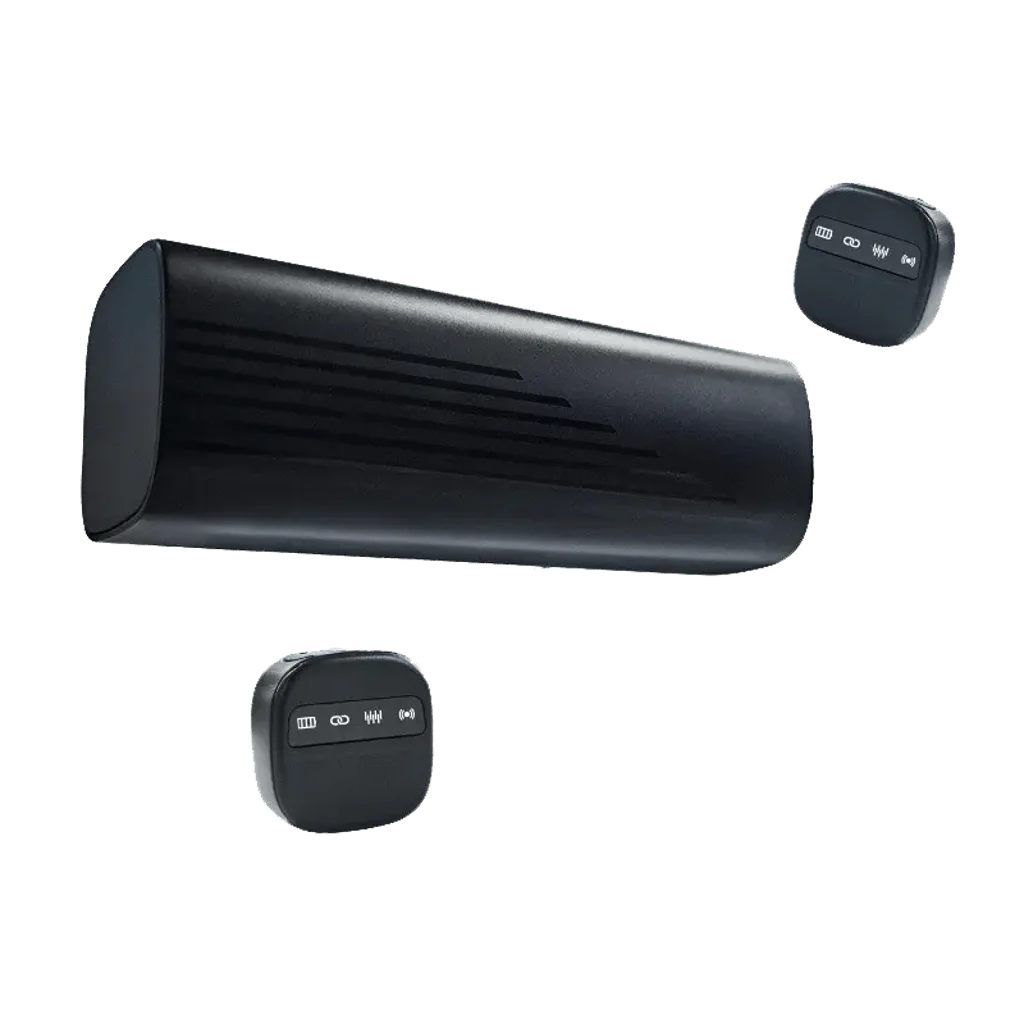
Aurora Sound is a Shenzhen source factory covering wireless lavalier microphones, smart audio glasses, TWS earphones, and voice amplifiers. Microphone engineering covers pattern and diaphragm selection by distance and noise spectrum, joint inlet and wind-cavity design, array layout with beamforming co-tuning, and production binning with acoustic retest, all inside one campus so iterative changes close quickly. ASKS20 and J13 are the reference lavalier platforms.